Fortaleza Under Siege: Lightning Strikes, Flooding, and the Power of Chuva Forte Fortaleza
Fortaleza, the vibrant capital of Ceará, found itself in the grip of a significant weather event this week, marked by intense rainfall, widespread flooding, and dramatic lightning strikes. The city and its surrounding areas experienced what locals refer to as a true chuva forte Fortaleza – a powerful deluge that tested urban infrastructure and daily routines. This isn't just a typical tropical downpour; a complex interplay of meteorological systems has contributed to a period of heightened atmospheric instability, bringing both challenges and a temporary reprieve from the usual heat.
Residents witnessed the raw power of nature firsthand, with numerous reports of streets turning into rivers and an astonishing number of electrical discharges illuminating the skies. The meteorological agencies have been vigilant, providing crucial forecasts and warnings as the state braces for continued impact. Understanding the forces behind this phenomenon, the immediate consequences, and how to navigate such conditions is paramount for everyone in the region.
Unpacking the Atmospheric Forces Behind Fortaleza's Deluge
The intense weather affecting Fortaleza and the broader Ceará state is no accident; it's the result of a powerful synergy between three distinct meteorological systems. According to the Fundação Cearense de Meteorologia e Recursos Hídricos (Funceme), the state's official meteorology and water resources foundation, this unique conjunction is responsible for the significant cloud formation and heavy precipitation. This period of intensified chuva forte Fortaleza is influenced by:
- Intertropical Convergence Zone (ZCIT): A belt of low pressure that encircles the Earth near the Equator, where the trade winds of the Northern and Southern Hemispheres converge. Its proximity and activity are crucial for rainfall in the Northeast of Brazil.
- South Atlantic Convergence Zone (ZCAS): A band of cloudiness and rainfall that extends from the Amazon basin southeastward into the South Atlantic. When active, it funnels moisture directly towards the Brazilian coast.
- Upper-Level Cyclonic Vortex (VCAN): A low-pressure system in the upper atmosphere that can enhance atmospheric instability and contribute to the formation of rain clouds at lower levels.
These systems collectively act as a formidable rain-making engine, intensifying cloud formation and driving the heavy downpours witnessed across the region. Funceme's initial forecast for the early week indicated that while Monday morning might see light to moderate showers, particularly along the coast and in the Baturité Massif, the intensity was expected to increase significantly. The afternoon brought more substantial rainfall to areas like Ibiapaba, the North Coast, and parts of the Central Sertão and Inhamuns, further fueled by maritime breezes. For Fortaleza and its Metropolitan Region, Monday was characterized by predominantly cloudy skies and isolated showers, transitioning into potentially more widespread and intense rain by late Monday night and into Tuesday morning.
An interesting consequence of this atmospheric activity, noted by Funceme, is a predicted drop in temperatures. While the storms bring disruption, the cooler air offers a welcome sense of thermal comfort for the population, a small silver lining amidst the torrential conditions.
Lightning Strikes and Rising Waters: The Immediate Impact on Fortaleza
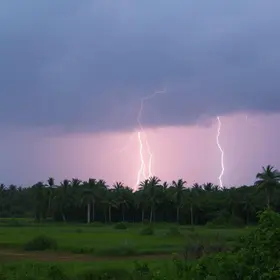
The sheer force of this week's chuva forte Fortaleza has left an undeniable mark on the city. Beyond the consistent rainfall, the most visually dramatic aspect has been the surge in lightning activity. A compelling video, captured by architect Larissa Pontes in the Passaré neighborhood, vividly depicted a lightning bolt striking an empty lot during a severe thunderstorm. This snapshot of nature's raw power quickly circulated, highlighting the intensity of the celestial display.
However, the beauty of such a spectacle comes with significant risks. Enel, the local energy distributor, reported a staggering 122 lightning strikes within a 24-hour period across Fortaleza. Such a high frequency not only poses a direct threat but also significantly increases the risk of power outages, affecting homes, businesses, and essential services. The intense electrical activity, combined with heavy rainfall, creates a hazardous environment that necessitates extreme caution from residents.
Concurrently, the city has grappled with significant rainfall accumulation. Regions like Beberibe recorded over 70 mm of rain, a substantial volume that quickly overwhelms urban drainage systems. This led to widespread flooding, with many streets becoming impassable, bringing traffic to a standstill, and disrupting the daily lives of Fortalezenses. Commutes were extended, businesses faced challenges, and the general rhythm of the city was severely impacted. The situation in Fortaleza mirrors the broader warnings issued across the state, with 99 Ceará cities under a 'great danger' alert from the National Institute of Meteorology (Inmet), indicating a high probability of extensive flooding and landslides.
Navigating the Storm: Safety, Preparedness, and Urban Resilience
In the face of such a chuva forte Fortaleza, safety and preparedness become paramount. For residents, understanding how to mitigate risks associated with lightning and flooding is crucial. Here are some essential tips:
- During a Thunderstorm:
- Seek shelter indoors immediately. Avoid open fields, beaches, and isolated trees.
- Stay away from windows, doors, and anything that conducts electricity (metal pipes, appliances).
- Unplug sensitive electronics to protect them from power surges.
- If caught outdoors, crouch low to the ground, minimizing contact. Do not lie flat.
- Avoid using landline phones and limit mobile phone usage to emergencies.
- Dealing with Flooding:
- Never attempt to drive or walk through flooded areas. Even shallow water can hide dangers like open manholes or strong currents.
- If your home is in a flood-prone area, consider elevating essential appliances and valuables.
- Prepare an emergency kit with essentials like water, non-perishable food, flashlights, and a first-aid kit.
- Stay informed by monitoring official weather alerts from Funceme and Inmet.
- Driving Safety:
- Reduce speed significantly.
- Turn on headlights.
- Maintain a greater distance from other vehicles.
- If visibility is severely reduced or roads are flooded, pull over safely and wait for conditions to improve.
The repeated occurrence of intense weather events also raises questions about urban resilience. Fortaleza, like many coastal cities, faces the dual challenge of managing a burgeoning population and an infrastructure that must adapt to increasingly extreme weather patterns. The rapid sharing of real-time information and personal videos, facilitated by smartphones, plays a dual role: it helps spread awareness of hazards and allows authorities to gauge the extent of the impact more rapidly. This communal vigilance, combined with robust city planning and responsive emergency services, is vital for safeguarding lives and property.
Adapting to Ceará's Dynamic Weather Patterns
The recent episode of chuva forte Fortaleza serves as a potent reminder of Ceará's dynamic and sometimes unpredictable weather patterns. While the region is known for its beautiful beaches and sunny climate, it is also highly susceptible to the influence of large-scale atmospheric phenomena. Funceme's continuous monitoring and sophisticated forecasting models are invaluable tools for the state, providing crucial lead times for civil defense and public awareness campaigns. These agencies are not merely reporting the weather; they are providing critical intelligence that allows communities to prepare and respond effectively.
As the climate continues to change globally, coastal cities like Fortaleza may experience an increase in the frequency and intensity of extreme weather events. This underscores the need for ongoing investment in resilient infrastructure, improved drainage systems, and public education on climate preparedness. The relationship between the urban environment and the powerful forces of nature is an ongoing negotiation, one that requires constant adaptation and foresight.
Conclusion
The recent surge of chuva forte Fortaleza, characterized by dramatic lightning and disruptive flooding, has been a stark illustration of nature's power. Fueled by a unique convergence of meteorological systems, the storms have challenged the city's infrastructure and the resilience of its residents. While the immediate impacts include widespread disruption and safety concerns, the cooler temperatures offer a minor comfort. As Fortaleza navigates these intense weather phenomena, the importance of robust meteorological forecasting, community preparedness, and adaptable urban planning becomes more evident than ever. The city's ability to recover and continue thriving hinges on its capacity to understand, respect, and adapt to the powerful forces of its natural environment.